
Debt Collection Strategy: Tracing ₽276M in Hidden Assets
A client purchased ₽276M in distressed claims for ₽625K. Both debtors had engineered enforcement shields: one through emigration and pre-emptive bankruptcy, the other through nominees and family members concealing real assets.
Two enforcement-proof debtors.
Lead debtor (former director) emigrated to a country with no mutual enforcement treaty with Russia. Zero assets detected in Russia. Second debtor (actual beneficiary) has ₽2.4B in old FSSP enforcement proceedings and does not appear in court.
Real recovery potential.
Identify hidden assets, map the network of nominees and connected persons, and build an enforcement strategy that could actually recover value from the ₽625K investment.
6-channel enforcement strategy.
Full dossier on 89 connected persons, 10+ linked companies, a primary operating asset, and a prioritised action plan with cost estimates and recovery projections.
The process
Data collection and structuring
- 30+ primary documents processed: court judgments across all instances, EGRN real estate extracts, FSSP enforcement data, corporate registry reports, individual dossiers
- Structured knowledge base assembled: 3,800+ rows with full cross-references and source tags
- Event chronology built across 8 epochs from company founding to the investigation date
Investigation
- 89 connected persons identified — the client was aware of only 12 at the outset
- Network of 10+ companies identified as linked by a single shared phone number (registered to 5 separate companies), cross-employment of staff, and shared legal addresses
Asset identification
- Operating timber company with ₽60M annual revenue found, registered in the name of the beneficiary's 81-year-old mother for 10 consecutive years
- Transfer documented in detail: two-stage scheme (first directorship transfer, then equity stake) at a symbolic price; recipient is a known insider from the business network
- Addresses, bank accounts, and real estate holdings of connected persons established
Legal analysis and strategy
- Full bankruptcy case of the debtor company analysed across 30+ separate disputes
- Parallel bankruptcy of affiliated company tracked: this entity received ₽239M from the debtor; client is the sole registered creditor meaning automatic return through the liquidation estate is available
- Legal grounds prepared for contesting the key asset transfer: sham transaction, abuse of right; suspect transactions in bankruptcy
Primary asset found: operating timber company.
Revenue ₽60M, profit ₽10M. Registered to the beneficiary's mother for 10 years, transferred for ₽10K three weeks before the investigation. Nine-point evidence package assembled for contesting this transaction.
Key findings
Full corporate network uncovered: a single phone number registered to 5 companies, cross-employment, and digital trace verification proved that formally "separate" companies form one structure under single control. Corporate email password: beneficiary's date of birth.
Both joint-and-several debtors fully profiled: emigrated debtor confirmed to have zero Russia assets, with active criminal case and federal wanted list entry. Main enforcement focus redirected to the second debtor who remains in Russia with identifiable real assets.
Network bridge identified: one individual simultaneously works for the timber empire (₽2.2B turnover) and received the key asset from the beneficiary's family — proving coordination and a controlled transfer, not coincidence.
What the client received
- 6-channel enforcement strategy with timeline, detailed cost estimates (₽750K–1.3M total), and expected recovery assessment per channel
- 10-step action plan with inter-step dependencies mapped and prioritising highest-return, lowest-cost channels first
- Evidence package for contesting the key asset transfer: 9 independent legal grounds across Civil Code and bankruptcy law
- Recovery estimate: ₽35–70M conservative scenario, ₽60–120M optimistic scenario against ₽625K purchase price and ₽750K–1.3M enforcement costs
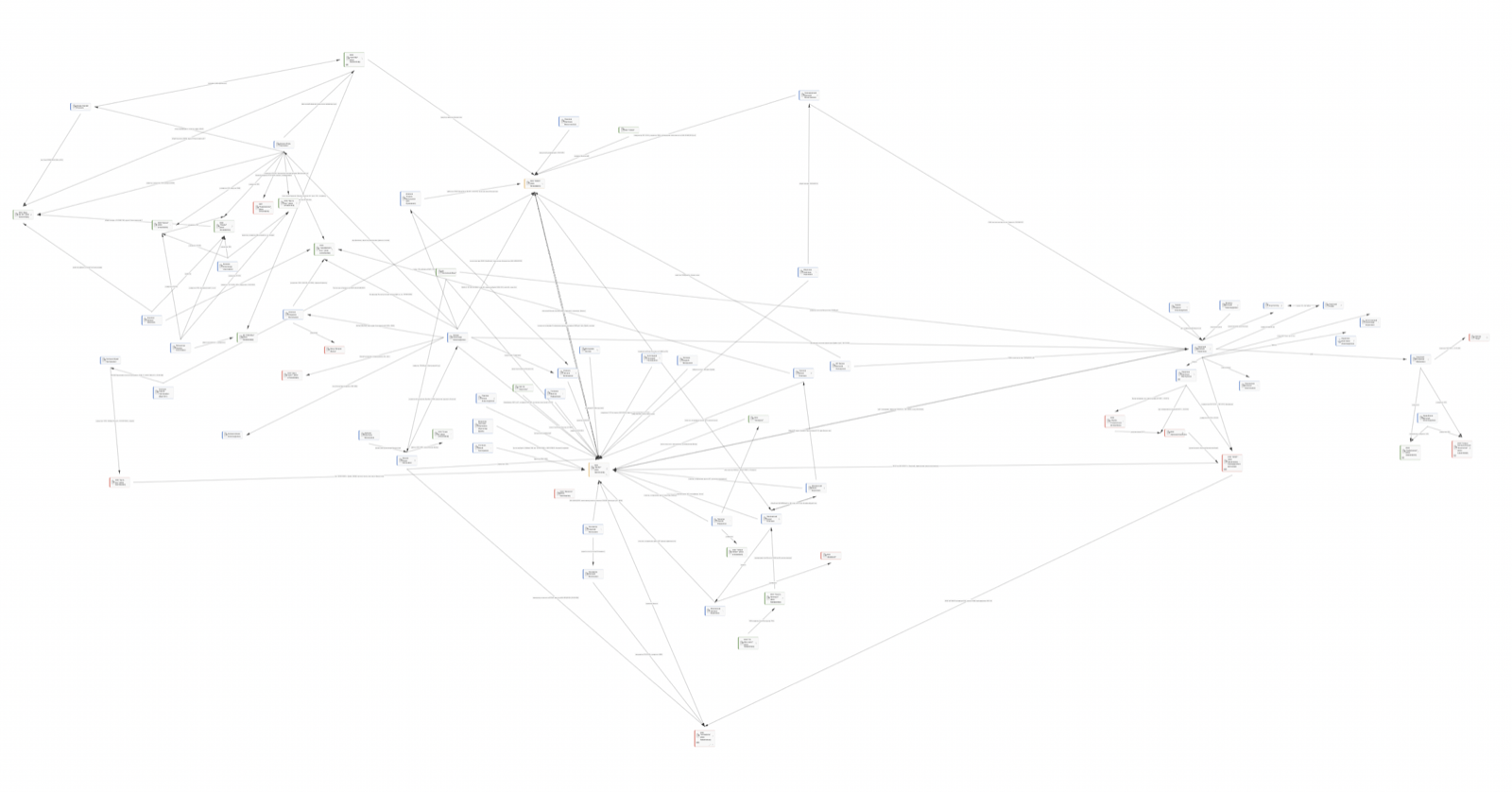
- Full dossier on 89 connected persons and 10+ companies; connection graph: 87 nodes, 114 edges
Legal and investigative basis
The investigation drew on court judgments, EGRN extracts, FSSP enforcement data, corporate registry filings, individual background checks, digital footprint analysis, and cross-referenced timeline reconstruction across the debtor company's full operating history.
Discuss a similar matter.
Initial conversations are confidential and without obligation.
[email protected]